Category Archives: SACHS AND THE CINEMA

An appreciation of Louis Armstrong

New musical has a tall task: covering Louis Armstrong’s amazing lifetime of miracles

‘A Wonderful World’ attempts to sum up an inventive and daring career in jazz that started in Chicago.

By  Lloyd Sachs | For the Sun-Times Oct 9, 2023

Louis Armstrong strikes a pose in Chicago in 1932 while promoting his first European tour.

Louis Armstrong strikes a pose in Chicago in 1932 while promoting his first European tour/Sun-Times file

It is no surprise that the new Broadway-bound musical about Louis Armstrong is called “A Wonderful World.” The jazz immortal is best known these days for his late-career vocal hit, “What a Wonderful World.” It’s an inescapable tune, a staple of movie soundtracks, easy-listening stations and Armstrong tributes, including one in which Kenny G overdubbed himself on the recording.

One hopes that “A Wonderful World,” which will run Oct. 11-29 at the Cadillac Palace following a weeklong run in New Orleans, lives up to the title. Revamped from its world premiere in Miami two years ago, the new version stars James Monroe Iglehart, who won a Tony Award for his performance as the Genie in “Aladdin.” and more recently appeared as Marquis de Lafayette/Thomas Jefferson in “Hamilton.” It tells Armstrong’s story from the perspective of the women in his life.

But as anyone with even a passing interest in Satchmo knows, the song, a squishy, nostalgia-drenched heartwarmer, is not the place to start for those who want to know what made Armstrong one of the great geniuses of the 20th century — an artist whose unprecedented virtuosity, musicality, inventiveness and daring stood jazz on its head in the 1920s and continued producing miracles throughout his career.

On classics such as “West End Blues” and “Potato Head Blues,” recorded in Chicago in 1928 with his storied Hot Five, Armstrong virtually invented the jazz solo. His clarion trumpet sound did Gabriel one better. His influence on succeeding generations, as a singer as well as horn player, has been so profound, it has impacted many artists who weren’t even aware of his impact. 

“Honestly, few of us trumpeters started with Louis Armstrong,” said Russ Johnson, the Milwaukee-based artist and Director of Jazz Studies at the University of Wisconsin-Parkside, who has performed frequently in Chicago.

“I myself started out following Miles Davis. But once you expose yourself to Armstrong’s recordings, as I did on a deeper level for a jazz history class I was teaching, you can’t help being overwhelmed by his achievement.

“His sound is the greatest trumpet sound ever recorded. His note choices are remarkable. We all use his phrasing. But for me, his sense of rhythm, his rhythmic complexity, is astonishing. It’s something you can’t transcribe. The way he plays a 5/8 rhythm over 4/4, it feels like he’s going to fall off the tracks. But he ends up bending back right into the middle of the next phrase. It’s all worked out exactly, perfectly.”
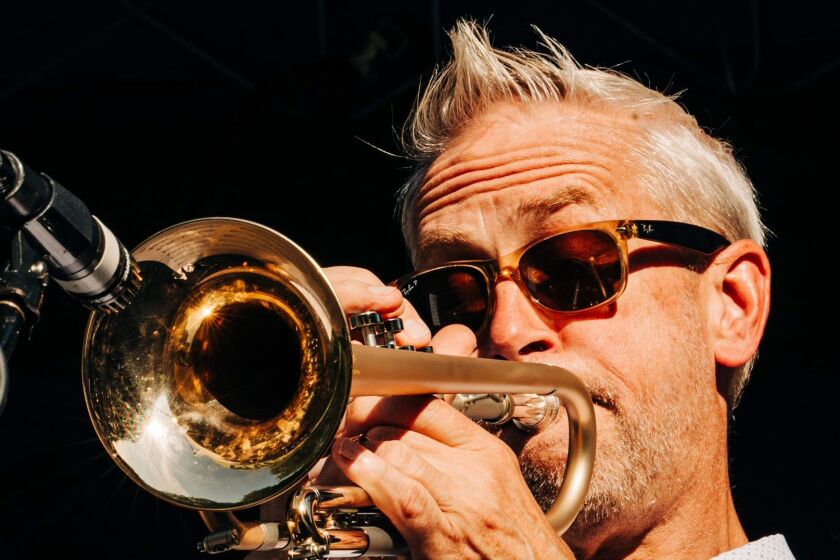
Trumpeter Russ Johnson says Louis Armstrong created “the greatest trumpet sound ever recorded.”

“As with Billie Holiday, I loved the voice and sound of Louis Armstrong from the first time I heard it,” said West Side native Dee Alexander, who lent her glorious voice to “Chicago Loves Pops!” the Jazz Institute of Chicago’s 2022 concert tribute to Armstrong.

“One note of his gravelly voice, whether spoken or sung, and I was hooked. I loved the smile in his voice along with the big sound of his horn. His improvisational and scatting technique was matchless.”

In her Satchmo appreciation for the New York Times’ recurring “5 Minutes That Will Make You Love…” music feature, young vocal star Cecile McLorin Savant wrote, “There is so much life and happiness in his singing and his sound. “There’s wisdom and playfulness at the same time.” 

The story of Armstrong’s emergence from childhood poverty and juvenile delinquency in New Orleans is ingrained in our cultural history. Beckoned to Chicago in 1922 by his hero and mentor King Oliver, he immediately made a big noise on the local scene in Oliver’s band and his own combos, recording tunes that altered music history with his Hot Five and Hot Seven. His star rose further after he moved to New York, where he led orchestras and combos including his All-Stars, which for years featured beloved Chicago drummer Barrett Deems. 

“I loved the smile in his voice along with the big sound of his horn,” vocalist Dee Alexander says of Armstrong.

He appeared in films including “High Society,” made treasured recordings with Ella Fitzgerald and served as a kind of international ambassador for jazz, bringing the music to Africa and Asia as well as Europe. For much of his career, he was subjected to ill-founded charges of selling out to the white audience with his jovial, wide-grinning showmanship. In fact, he was a strong advocate for civil rights, standing up to discriminatory policies in the South, among other places, with his actions as well as his words. 

As is revealed in his vast collection of spoken and written diaries, scrapbooks and other writings (all perusable at the Louis Armstrong House Museum and Center in Queens, New York), his congenial popular image obscured his intellectual bent, introspectiveness and earthiness. He smoked pot and cussed a lot. He was a multi-faceted American hero whose birthday will forever be celebrated on July 4, even though the actual date was revealed to be Aug. 4. 

Ultimately, in reaching the widest possible audience, Armstrong succeeded in doing something rare: demonstrating that great entertainment could be great art and vice versa. A wonderful achievement, indeed, though one that goes far beyond the sentimentality of “What a Wonderful World.”

Kate Dumbleton’s passion for Hyde Park Jazz Festival comes through fabulously loud and clear

‘It means a lot to be able to give exposure to local artists who might not get it otherwise,’ the longtime fest’s artistic director says.

By  Lloyd Sachs | For the Sun-TimesSept 19, 2023

DUMBLETON_091923_08.JPG
For Hyde Park Jazz Festival artistic director Kate Dumbleton, nothing is more important than making connections with the South Side community in which the fest is based — with its storied music history, its sturdy traditions, and of course its musicians.

It takes more than a gathering of great musicians to make a great jazz festival. For Kate Dumbleton, the much-admired executive and artistic director of the Hyde Park Jazz Festival, it takes a vision.

For her, nothing is more important than making connections with the South Side community in which it is based — with its storied music history, its sturdy traditions, and of course its musicians.

“I love this community and all it has to offer,” she said. “It means a lot to be able to give exposure to local artists who might not get it otherwise.”

In making those connections, the festival, the 17th edition of which takes place Sept. 23-24 at 14 venues across Hyde Park, has established its own special character and vibe. They owe a lot to its diversity of settings, which include the elegant auditorium of the Logan Center for the Arts, the acoustically wondrous Rockefeller Chapel, the outdoor stages on the fest’s midway and the Logan Center’s intimate penthouse performance room. More than 150 musicmakers are scheduled to perform.

“With all these different cultural spaces, we got more people to see what’s going on,” said Dumbleton.

Increasingly, the festival has moved out of the giant shadow cast by the deeper-pocketed Chicago Jazz Festival in Millennium Park — no easy achievement, considering the CJF takes place a scant few weeks before the Hyde Park event. 

When Dumbleton became the fest’s director in 2012, she said, she wanted to stay committed to what its founders had done with their largely straight-ahead lineups.

“But I also wanted to expand the conversation to a broader range of artists and to more venues to illuminate and heighten all the great things that were happening on the South Side,” she said.

The Hyde Park Jazz Festival was started by the Hyde Park Jazz Society in 2006, the year Dumbleton moved to Chicago from San Francisco, where she owned and operated a performance and exhibition space and wine bar. She came here to pursue a degree in arts administration and cultural policy at the School of the Art Institute of Chicago (where she is currently an associate professor of arts administration and policy). 

She brought with her a keen interest in the music history of the South Side and the DIY workings of its venerated Association for the Advancement of Creative Musicians. Among other things, the AACM’s founding members had turned storefronts, churches and people’s apartments into performance spaces when mainstream venues were not available to them.

After settling in town, Dumbleton also schooled herself on the North Side movement known as Umbrella Music, a consortium of musician-presenters including Ken Vandermark, Josh Berman and Dave Rempis as well as the influential presenter/critic/SAIC lecturer John Corbett.

“I loved their scrappiness, their insights into how to build a scene,” Dumbleton said, referring to their ongoing series at clubs including the Hungry Brain, the Hideout and Elastic. “I loved their DIY energy.” 

They have more than returned those feelings.

“Kate is a remarkable curator, director and organizer because she has an implicit understanding of what artists need to get their work done,” said Rempis, who recently stepped down after two decades of running the Elastic Arts organization and its Improvised Music series.

“That’s because she actually hangs out with them. And because she actually loves the work on a deeply personal level.” 

Before taking the reins of the Hyde Park festival, Dumbleton was executive director of the late and lamented Chicago Jazz Ensemble, doing all she could to keep it afloat during financially difficult times. After joining the HPJF, she lifted it out of a state of uncertainty by establishing it as its own entity, out from under the auspices of the Hyde Park Jazz Society. Building a board of directors, she said, “was like building a car while you’re driving it.” 

Said Rempis, “Kate is one of the only people I’ve ever met who can translate that world [of the arts] into the institutional world of organizations, foundations and funders by encouraging, advocating, cajoling, or outright twisting arms if need be, to make sure that institutions actually support artists’ needs.”

This year’s exceptional lineup includes East Coast NEA Jazz Masters Louis Hayes and Kenny Barron. But most of its spotlight will shine on nationally recognized Chicago artists including trumpeters Josh Berman and Ben LaMar Gay, saluting the recently deceased Jaimie Branch, and vibraphonist Jason Adasiewicz performing works by AACM legend Roscoe Mitchell.

When Chicago native Nicole Mitchell, jazz’s top flutist, premieres her new work, “South Side Love Letter,” she’ll be playing what Dumbleton and most everyone else at the fest will be feeling. 

Chico Freeman to honor his famous father, ‘my hero’ Von Freeman, at Chicago Jazz Festival

Even while absorbing his dad’s unique sound, tenor saxophonist found his own powerful voice early on.

By  Lloyd Sachs | For the Sun-Times Aug 28, 2023

Chico Freeman
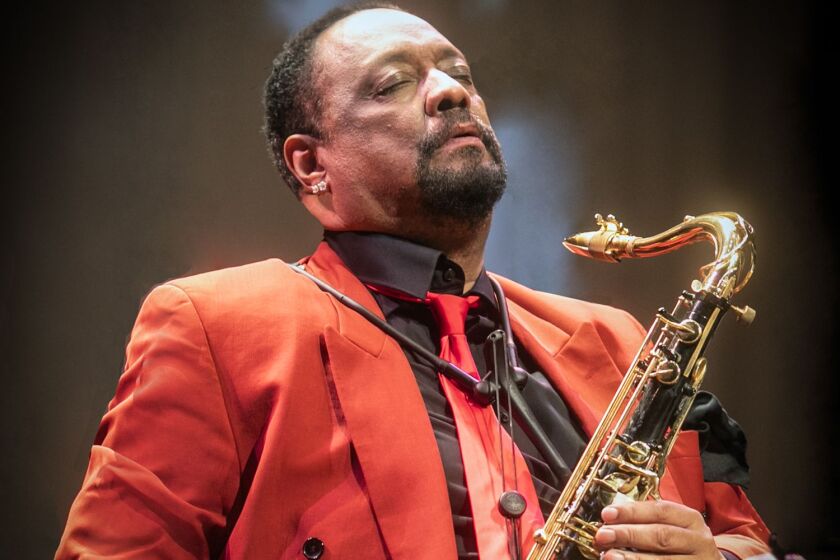
Jazz saxophonist Chico Freeman will pay tribute to his late father, jazz great Von Freeman, at this year’s Chicago Jazz Festival.

On Thursday, the Chicago Jazz Festival will continue its tradition of celebrating the late saxophonist Von Freeman and his illustrious musical family. Marking the beloved saxophonist’s centennial — he would have turned 100 on Oct. 3 — his tenor-playing son Chico Freeman will lead a band of friends and family including Von’s brother and his uncle, guitarist George Freeman, still going strong at 96.

For the man called Vonski, an unjustly obscure artist for much of his career, even in his hometown, the tributes are richly deserved. But it’s also great seeing the 74-year-old Chico back in the spotlight in the place he grew up following last year’s premiere in Hyde Park of his ambitious Legacy Project. A sweeping work for 19-piece orchestra, the work honored his entire family, including his other uncle, the late drummer Bruz Freeman. 

Chico, who will perform his own compositions with his new quintet at the Hyde Park Jazz Festival on Sept. 24, has had a remarkable career of his own. He has played with such greats as McCoy Tyner, Elvin Jones, Sun Ra and Tito Puente and in terrific groups of his own — plus a pair of supergroups, the Leaders and Roots. He has been a prolific composer, produced other artists and performed with symphonies and African, Indian, Balkan and aboriginal musicians.

But partly because he has lived in Europe for nearly 20 years, first in Greece and for the past dozen years in Switzerland, and partly because he has recorded mostly for independent and foreign labels (“Fathers and Sons,” the 1982 Columbia release featuring the Marsalis and Freeman families, is a notable exception), he doesn’t have as high a profile as he deserves. But that was never an issue for Von, and it’s not for Chico, either. 

“My dad, who was my hero, gave me some advice from the start,” said Chico, speaking via Zoom from Switzerland. “He told me I had to be original and sound like myself. We all have the same 12 notes. What’ll make you different from me, and everyone else different from you, is your sound. It’s like your voice.

“I asked myself, how do you do that? I’m influenced by him and by Coltrane and so on and so on. And then it came to me. It’s easy if you believe in who you are and allow yourself to be yourself.” 

As a kid, he was surrounded by music. When Von rehearsed in their house off 69th Street, he said, “My mom would open all the windows and all the kids on my block would gather on our porch to hear the music.”

Later on, while Chico was attending Northwestern University, he would frequent his father’s jam sessions (and sometimes tend bar for him) at South Side clubs including Betty Lou’s, the Enterprise, Toni’s Pad and the old Apartment Lounge.

At the festival, Chico will perform songs he played with his father when they toured Europe together during the late 1970s and 1980s (a serious homebody, Von had to be cajoled into traveling abroad), tunes from the jam sessions and songs evoking other memories. His band of Vonski-ites will include Mike Allemana, Von’s longtime guitarist and music director, whose “Vonology” suite was one of the highlights of last year’s fest; McCoy Tyner bassist Avery Sharpe (who appeared with Chico and a dozen other up-and-comers on the 1983 “Young Lions” album); drummer Yoron Israel, vocalist Margaret Murphy-Webb and, representing the younger generation, vibraphonist Thaddeus Tukes.

As much as he loves delving into the past, Chico is most excited about the future.

“I’m a work in motion and constantly developing,” he said. “I just feel like I want to stay open and creative and keep evolving. The truth is in the moment. Whenever I’m playing I try to focus on what I feel and how I feel right at that moment. And from that point on, that’s the truth of who I am.”

Soon come: an expanded, title-complicating Season 2 of Sachs and the Cinema!

Hey, thanks for your interest in and support of Season One of Sachs and the Cinema! Coming soon, Season Two, featuring vintage interviews with music legends Bryan Ferry, Ornette Coleman and Steve Reich, guest critics (maybe you!) and far more technical fluency! Meanwhile, play ball!

Bill Forsyth: “I think it’s quite helpful being illiterate as a filmmaker.”

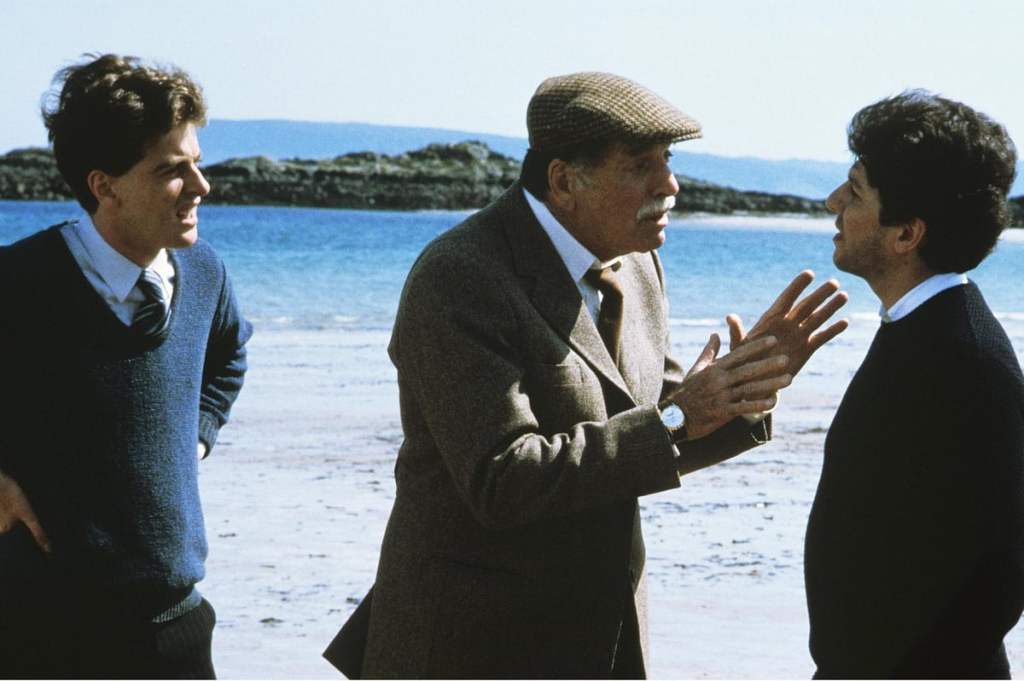
When Bill Forsyth was turning out gems in the 1980’s, first quirky Scottish films like Local Hero and then offbeat Hollywood productions like the Burt Reynolds vehicle Breaking In, we had reason to look forward to him enjoying a long and successful career.

Things didn’t work out that way, alas. In spite of strong reviews for Breaking In and Housekeeping, commercial success eluded him in America. And then his cosmic Robin Williams drama Being Human was universally panned – after which, save for a so-so sequel to Gregory’s Girl, his “marvelously cockeyed” coming of age comedy as one critic described it, he largely disappeared from the scene.

But when I spoke to Forsyth in Chicago in 1981, he was riding a wave of enthusiasm for “Gregory’s Girl,” which was just out. In our chat, he talks about how he went from school dropout to filmmaker, the lessons he learned from the French New Wave – and his hopes for the future. Listen to the conversation on the latest episode of Sachs and the Cinema via Spotify, Apple Podcasts and other platforms. And sign up for the podcast here.

Burt Lancaster talking to Peter Riegert in Local Hero

Arthur Penn: “It was a film that was not going to be quieted.”

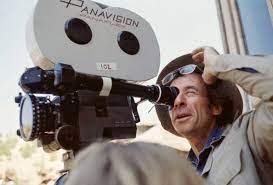
“There’s nothing more pathetic than the level of emotion in films like Star Wars.” When Arthur Penn said that during our 1985 interview, which you can hear on the latest episode of Sachs and the Cinema, he did so as a director who got carved up critically himself – for Bonnie and Clyde, now regarded as one of the masterpieces of American cinema.

Regarded as an intellectual artist – in a good way! – he turned out other smart gems including Mickey One, Little Big Man, Alice’s Restaurant and Night Moves. But he increasingly found himself frustrated by Hollywood’s dumb-down ways and spent much of his later period in the theater. Hear him candidly discuss his experiences during a 1985 trip to Chicago to promote the espionage thriller Target, starring his frequent star Gene Hackman and Matt Dillon.

Listen to the podcast on Spotify, Apple Podcasts, Amazon Podcasts and other platforms. And sign up for the really big show here.

Tagged , , , , , , , , ,

Michael Powell: “Art is all that matters”

“Art is all that matters.” In living up to that dictum, the visionary British director Michael Powell made movies like no one else. With his Hungarian screenwriting partner Emeric Pressburger, he made fantasy seem real and reality seem fanciful, whether turning a British backlot into the Himalayas (Black Narcissus) or staging a courtroom trial in heaven (A Matter of Life and Death).

It was a thrill to chat with Powell in Chicago back in 1986, when he was in town working on his memoirs while his wife, the great film editor Thelma Schoonmaker, worked on his friend Martin Scorsese’s The Color of Money. I’ll never forget our lunch at the late and lamented Nuevo Leon down on 18th Street – a festival of accents!

Hear my interview with Powell on the latest episode of Sachs and the Cinema, accessible via Spotify, Apple Podcasts and other platforms. And subscribe to the podcast here.

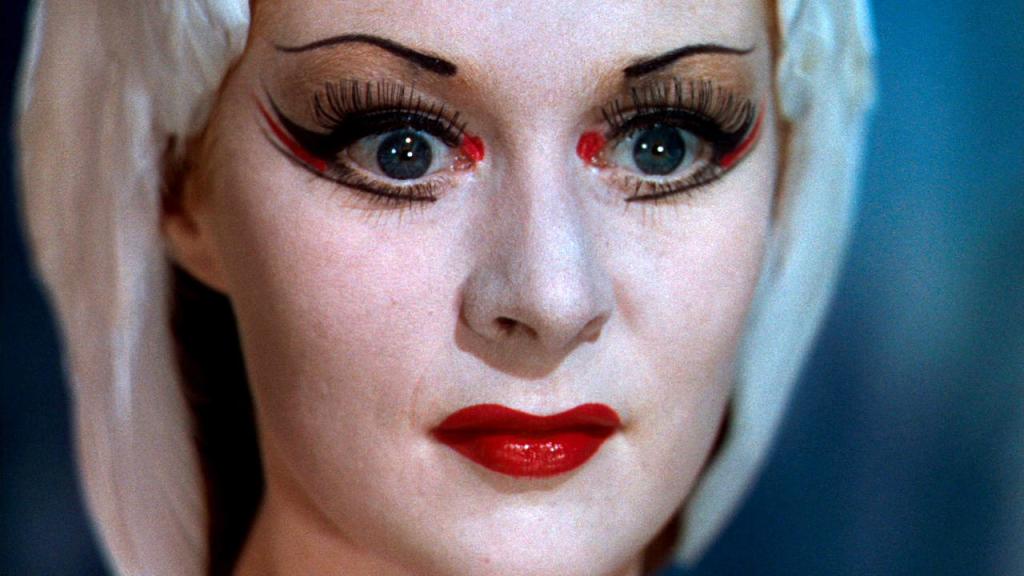
Moira Shearer in Powell’s The Red Shoes
Tagged , , ,

Sachs and the Cinema Featured in Axios Chicago

How cool is this? Thanks a ton to Monica and Justin at Axios Chicago for their kind attention to Sachs and the Cinema. Go to the Axios Chicago website and subscribe to their newsletter. And, of course, subscribe to Sachs and the Cinema. Next up: the great Arthur Penn.

“Fascinating 1980s-era interviews with some of the world’s most important filmmakers” – Axios Chicago on Sachs and the Cinema

Thanks to Monica Eng and Justin Kaufmann for their kind attention to the podcast in the Axios Chicago Newsletter:

Lloyd Sachs uncovers decades-old chats with filmmakers on new podcast

Justin Kaufmann

Justin Kaufmann

Veteran Chicago arts writer Lloyd Sachs had the misfortune of covering film at the Chicago Sun-Times during the Roger Ebert era.

  • Meaning that no matter how astutely Sachs wrote about cinema, he’d always work in the shadow of perhaps the most influential film critic of all time.

Why it matters: The writer’s film coverage is enjoying fresh life in the new podcast, “Sachs and the Cinema,” featuring fascinating 1980s-era interviews he conducted in Chicago hotel rooms with some of the world’s most important filmmakers.

The subjects: Directors John Carpenter (“Halloween”), Terry Gilliam (“Brazil”), Bernardo Bertolucci (“Last Tango In Paris”) and more.

  • Each 30-minute episode lets you eavesdrop on thoughtful chats never meant for broadcast, with snacking, real phones ringing and coffee cups clinking in the background.

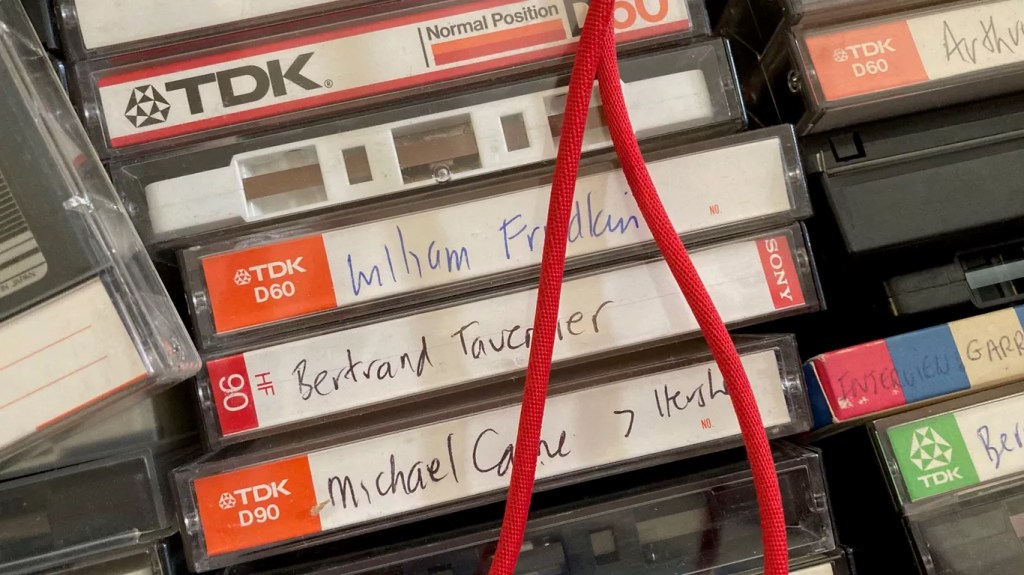
The inspiration: “When informed of the tapes and my desire to launch them out there in the share-o-verse, young people who know this stuff said I was sitting on a ‘gold mine’  interest-wise, not money-wise  and that I should go pod,” Sachs tells Axios.

His biggest surprise: “How few dumb questions my younger self asked.”

His hope: “That listeners gain a deeper appreciation of these great artists, and the film art, through spending some quality ‘down’ time with them.”

Sachs’ favorite moments: “Hearing hallowed masters Michael Powell (‘The Red Shoes’) and Bertrand Tavernier (‘Round Midnight’) break out in giggles over a comment. … What great company they were!”

Subscribe to Sachs and the Cinema here.

And subscribe to the Axios Chicago Newsletter here.